
Herman Kerkhoff is a Registered Onsite Wastewater Practitioner (ROWP), planner and installer, registration number 0W0733.
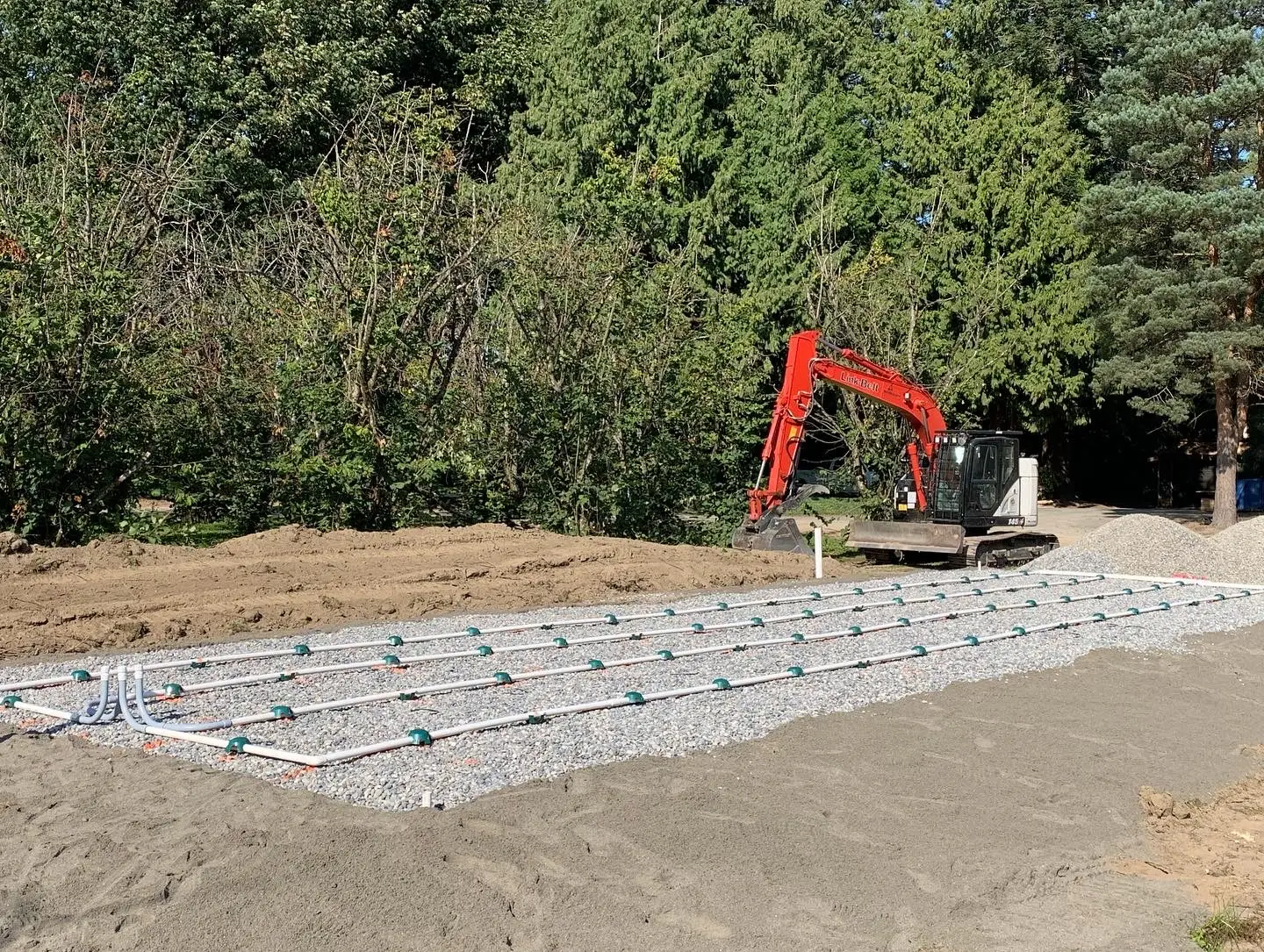
The three septic system types we install are a type 1 gravity system, a type 1 pressure system (in-ground or mound style) and a type 2 pressure system with a treatment plant (in-ground or mound style). A gravity system costs the least of the three, and your site decides whether you are allowed one. Soil, groundwater, space, the size of the house and the setbacks from water decide which system a site gets, so we dig a test pit before we quote.
Kerkhoff Excavating has designed and installed septic systems in Chilliwack and the Fraser Valley since 2005. Herman Kerkhoff, our owner, assesses each site, designs the system, files the paperwork with the Health Authority and installs it.
The Three Septic System Types at a Glance
A gravity system needs the most room and soil that suits it. A pressure system pumps the effluent to the field, so it suits soil that drains too fast or a higher water table. Adding a treatment plant cleans the effluent before it reaches the soil, so the system can fit a tighter site or more restrictive soil. Both pressure systems can be built in the ground or as a mound, which raises the field above the ground. On Herman’s tight-lot job, a treatment plant fed a sand mound.
| System | What it is | When a site needs it | Space needed | Maintenance |
|---|---|---|---|---|
| Type 1 gravity system | A septic tank settles out the solids, and the liquid, called effluent, goes to the septic field with no further treatment. BC’s regulation calls this type 1: treatment by septic tank only. | The soil has a percolation rate between 0.5 and 10 minutes per inch, the distance to groundwater is greater than 90 to 150 cm, depending on the soil type, the lot has sufficient room for the field, and the field fits inside the setbacks. Soil that percolates faster than half a minute per inch must have a pressure system. | The most of the three. It is the lower-cost system that takes up more space. | The tank needs pumping on the schedule in your maintenance plan. |
| Type 1 pressure system | A septic tank plus a pump chamber that transfers effluent by pressure from the tank to the dispersal field. | The soil, groundwater or space rules out a gravity system, for example soil that drains too fast or a site with a higher water table. | Size is determined by the soil type. Soil with a higher permeability requires less space, while soil with a lower permeability requires more space. | Tank pumping and flushing of the pressure distribution system, as your maintenance plan sets out. |
| Type 2 pressure system with a treatment plant | Similar to a type 1 pressure system, with the addition of a treatment plant. This produces a higher quality effluent before the effluent even reaches the soil interface. | A treatment plant is required where the site is too tight to allow for type 1 dispersal, or where the groundwater or soil conditions are too restrictive and require secondary treatment. | Can reduce the footprint of the field if required to accommodate tighter sites. | Follows the maintenance plan for the tank and the treatment plant that feeds it. |
The type 1 and type 2 definitions come from section 1 of the BC Sewerage System Regulation.

What Decides Which Septic System Your Site Gets
Five things decide your system: the setbacks, the soil, the groundwater, the space and the size of the house. Herman checks the setbacks first, because they decide where on the lot a system can go at all.
- Setbacks. The system has to stay back from lakes, streams, steep slopes and wells. BC’s regulation sets 30 metres between a septic system and a well that supplies a home’s water (section 3.1).
- Soil. The soil has to treat the effluent and drain at the right rate. Before we build, the paperwork we file records the type, depth and porosity of the soil (section 8).
- Groundwater. Herman checks the groundwater conditions on site, because they affect the system type along with the soil and the space.
- Space. A system that fits a bigger area can be a simpler one. On a new build, call us when you call your architect, because once the driveway and pool are drawn, the lawn that is left can force a more complex system. As Herman says, “nobody’s bragging about how amazing their septic system is, right?”
- House size. We size a system on the number of bedrooms and the square footage. A two-bedroom house and a seven-bedroom house need different systems.
Why the Cheapest Septic System Is Not Always Allowed
A gravity system can work on a site and still not be permitted. BC’s current septic rules took effect in 2005, and Herman sums up the change like this: “it went from disposal to treatment.”
Before 2005, if the wastewater went into the ground, the rules were satisfied. Today the rules protect the water system, so the system has to treat the wastewater as well as drain it. That is why an owner whose old gravity system ran for 40 years can be told a new one would not be approved. On those sites, Herman says, a gravity system “would physically work”, but may not provide the treatment within the soil required to prevent contamination of an aquifer.
When the Soil Drains Too Fast
Soil can drain too well for a gravity system. It sounds backwards, but if the soil drains too fast, a gravity system is not permitted on it. A site like that needs a different design, such as a pressure system or a treatment plant, which treats the effluent before it reaches the soil.
Why Herman Digs a Test Pit Before He Quotes
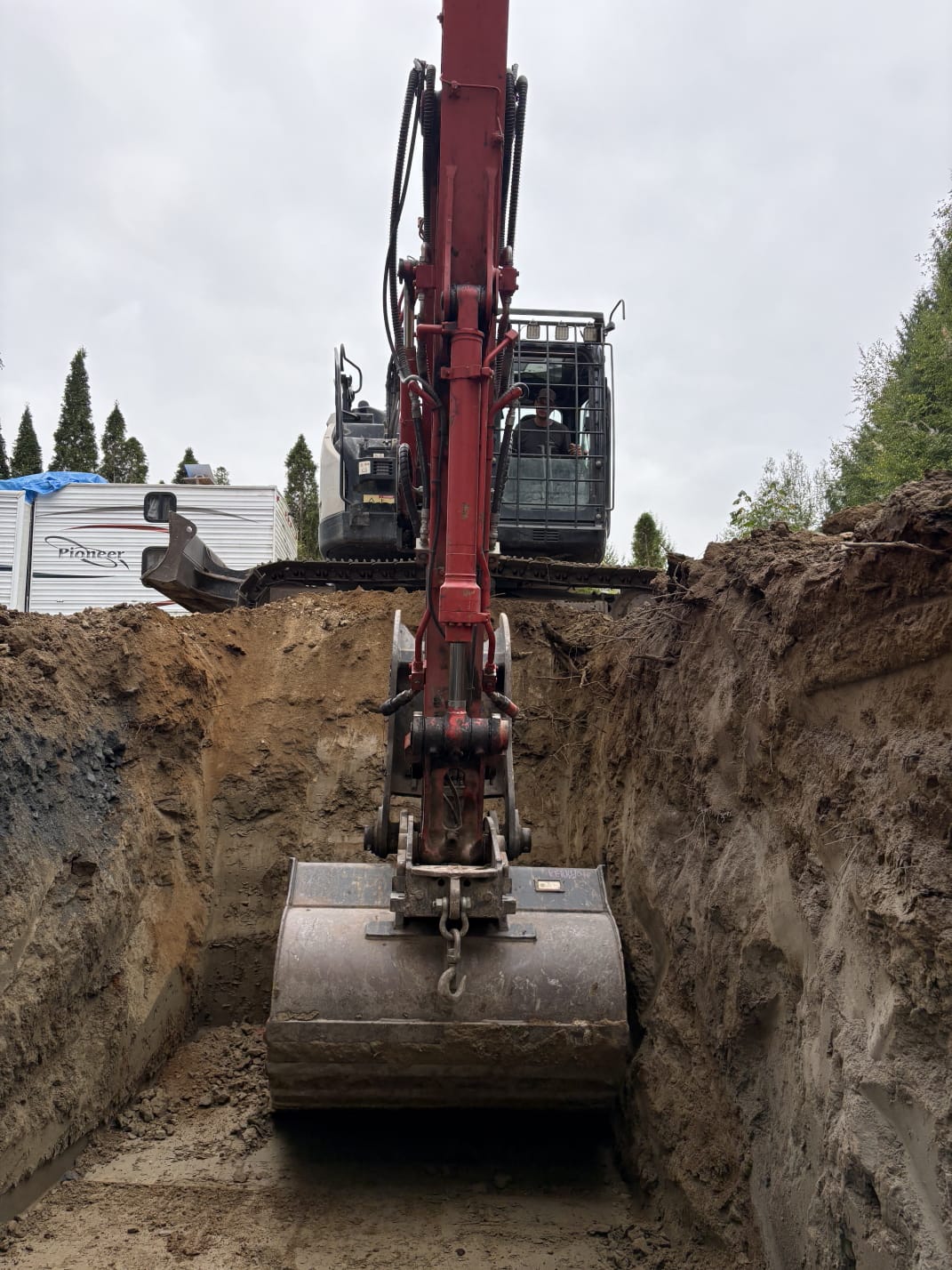
A test pit shows the soil your system will sit in, and the soil can decide your system type and the price. Herman comes out himself with a mini excavator, digs the pit in a couple of hours and quotes once he has seen the soil.
On one job, the owners already had a quote of about $60,000 for a treatment plant, given that morning without a test pit. Herman dug a test pit, found the soil favourable enough for a gravity system and installed one for about $25,000. “25,000. Save them significant money,” was Herman’s summary, and the owners were happy.
The same test can point the other way on your lot, because your soil decides your system. Our septic system cost guide explains what moves the price.
The site visit is free. If your site needs a test pit, the mini excavator is billed separately.
Type 1, Type 2 and Type 3 Septic Systems
BC’s regulation sorts septic systems into three types by how clean the effluent is when it leaves treatment. Herman designs and installs type 1 and type 2 systems: a gravity system or a pressure system without a treatment plant is type 1, and a pressure system with a treatment plant is type 2.
- Type 1 is treatment by septic tank only.
- Type 2 produces effluent with less than 45 mg/L of suspended solids and a 5-day biochemical oxygen demand under 45 mg/L. Biochemical oxygen demand measures how much waste is left for bacteria to break down.
- Type 3 produces effluent under 10 mg/L on both measures, with a median fecal coliform count under 400 per 100 mL.
These limits come from section 1 of the regulation, and a professional, such as an engineer, has to supervise any type 3 system (section 6). Herman does not do type 3 systems. He says a lot of treatment plants are described as producing type 3 quality effluent without the type 3 name: “they tend to create type three quality without calling it type three.” Our article on type 1, 2 and 3 septic systems explains the differences in more detail.
What a Sand Mound Looks Like on Your Lot
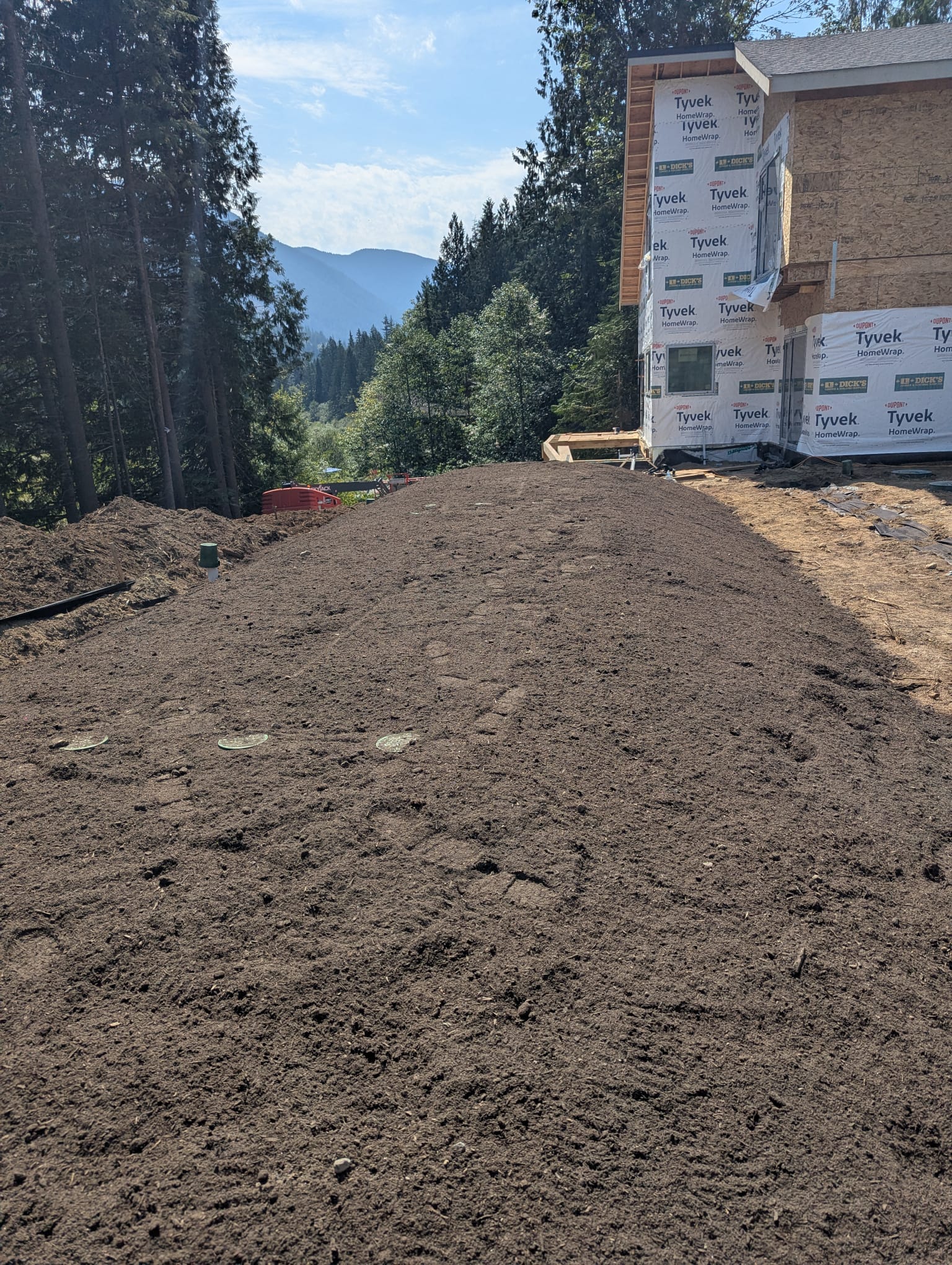
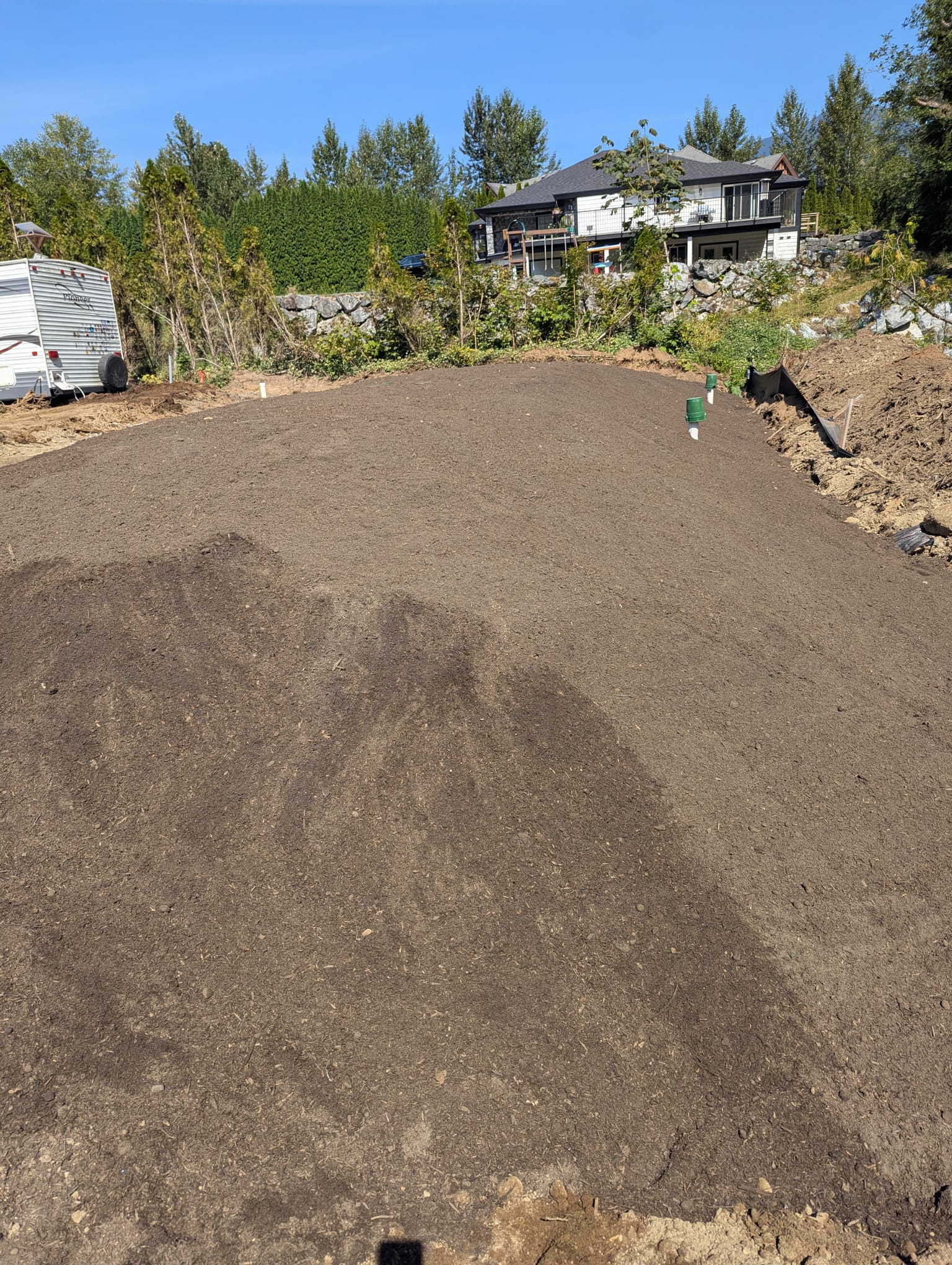
A sand mound sits above your yard, so plan for its height before it is built. At the end of August 2026, Herman installed a treatment plant and a sand mound for a big house on a small lot. The system ran right up to the property line and an edge of bank, with a lake behind the property and steep cliffs nearby.
The drawing showed the mound at about 30 inches high, and before he started, Herman marked the top of it on the wall. “I literally put a mark on the wall,” he says. The owners were still surprised by the height when the job was done. Herman says they have been happy, and they have kept hiring him for their utility work since. The paperwork took about two weeks and the install took a full week.
If your design includes a mound, ask us to show you its height on site, and picture it at full size before we dig.
How We Choose Your Septic System, Step by Step
We pick your system type after we have assessed the site, and the design goes to the Health Authority before any digging starts.
- You call Herman or send an inquiry, and we book a free site visit.
- Herman checks the setbacks, soil, groundwater and layout, and digs a test pit where the site needs one.
- We prepare a preliminary design and a quote.
- Once you approve, we file the final design with your local Health Authority. Design takes about 2 weeks, and permit approval takes up to 1 week.
- We install the system, which takes 2 to 5 days.
- You receive the as-built drawings, an operations and maintenance manual and a letter of certification for the final inspection.
BC’s regulation requires an authorized person, such as a ROWP, to file the plans before construction and to file a letter of certification within 30 days of finishing (sections 8 and 9). Our septic system design and septic system installation pages explain each stage.
Septic System Types: Frequently Asked Questions
What is the cheapest septic system?
A gravity system is the least expensive type, when your site allows one. The soil, groundwater, space and setbacks decide whether it does, so we confirm it with a test pit before we quote.
What are the 3 types of septic systems?
In BC, the three types are type 1, type 2 and type 3, sorted by how clean the effluent is. Type 1 uses a septic tank only, type 2 adds treatment, such as a treatment plant, and type 3 treats the effluent to the highest standard under a professional’s supervision. Herman designs and installs type 1 and type 2 systems.
How does an aerobic septic system work?
An aerobic septic system, also called a treatment plant, cleans the wastewater further after the septic tank, before it reaches the field. It blows air into the effluent, which encourages the growth of aerobic bacteria that break down the pathogens in the effluent.
Can I replace my old gravity system with a new gravity system?
It depends on your site. The rules changed in 2005, so a site where a gravity system worked for decades may now need a pressure system or a treatment plant. A test pit and a site visit show whether your lot still qualifies.
How high is a sand mound?
The height depends on the design, and your drawing shows it before we start. On Herman’s August 2026 tight-lot job, the mound stood about 30 inches high.
Does a test pit cost extra?
The site visit is free. If your site needs a test pit, the mini excavator is billed separately.
Who maintains my septic system after it is installed?
You do, by following the maintenance plan we give you. BC’s regulation makes the owner responsible for maintaining the system to that plan and keeping records of the work (section 10). We design, install and repair septic systems, and we do not pump tanks.
Find Out Which Septic System Your Site Needs
Call Herman at 604-795-0601 or send Kerkhoff Excavating an inquiry to book a free site visit.